
7 Best Banks for Veterans in 2026: Fees & Perks
The best banks for veterans in 2026: who can join each one, the fee waivers tied to service, and how to combine a military credit union with an online.
By Michael Hewitt, Founder & Editor-in-Chief. Updated September 24, 2026.
Veterans carry benefits that most civilians can't access: membership at military-affiliated credit unions, and fee waivers tied to service status. But eligibility rules diverge sharply between institutions. USAA requires an honorable or general discharge, Navy Federal sets its own membership rules, and PenFed Credit Union is open to anyone. A veteran who applies to the wrong institution, or parks savings in a traditional bank account paying near-zero APY, can lose hundreds of dollars a year in missed interest and unnecessary fees. The seven institutions below cover the main scenarios veterans face, from broad credit union eligibility to online-only rate shopping to full-service branch banking.
1. Navy Federal Credit Union
Navy Federal is the largest credit union in the country. Its field of membership covers veterans, retirees and annuitants, and extends to their families and household members.
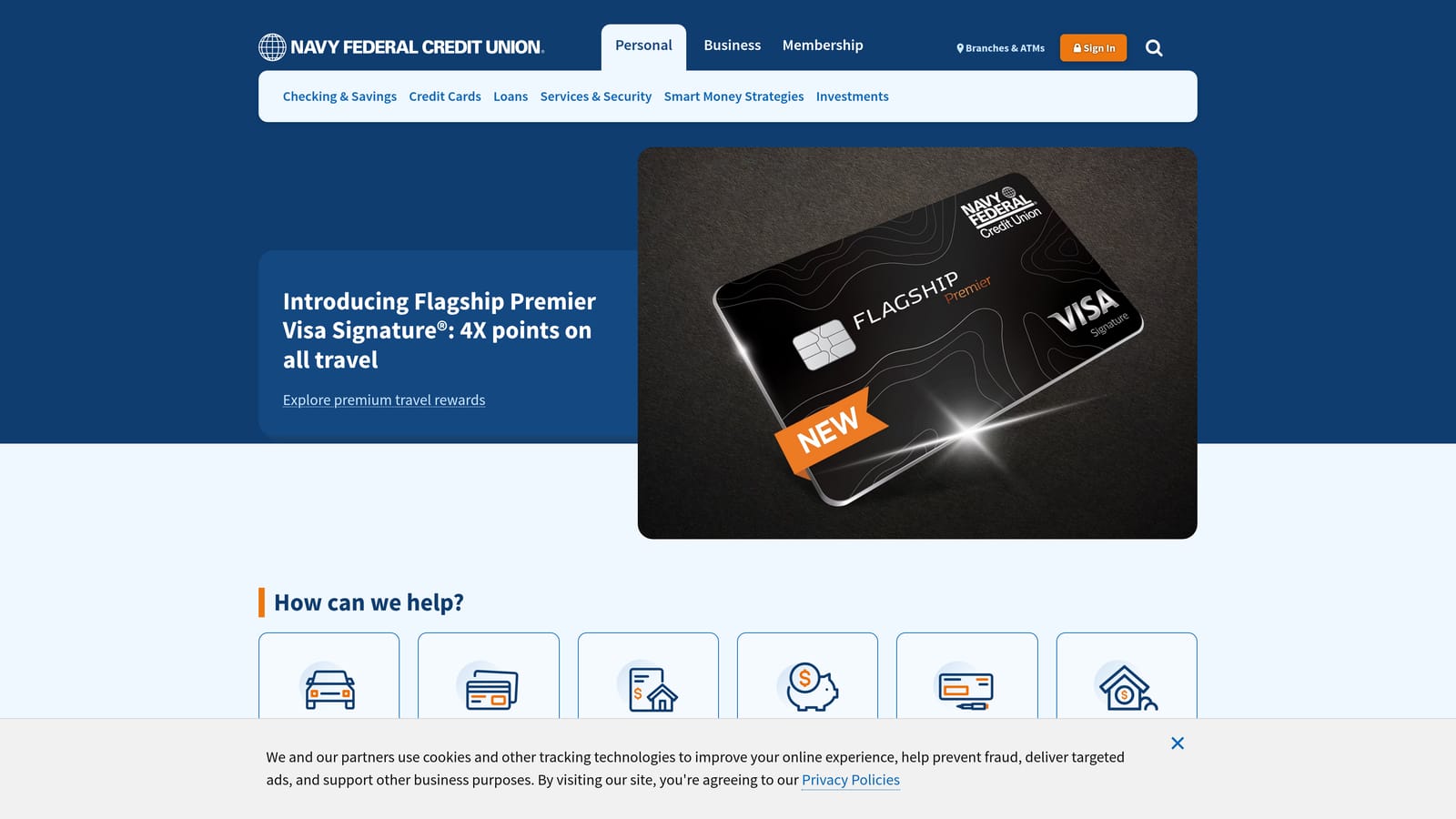
Consider a veteran who is unsure whether their service history qualifies for a particular military credit union. Checking Navy Federal's eligibility first, and keeping PenFed, which anyone can join, as the fallback, means no application is wasted and no credit inquiry is spent on an account they cannot open.
- Apply online with a DD-214 or veteran ID card as proof of service.
- Open a checking account; Free EveryDay Checking carries no monthly service fee.
- Link a Navy Federal savings account and set up automatic transfers to build a habit of saving.
The common mistake is assuming membership requires a family connection to active-duty or retired personnel. Veterans qualify independently on their own service record and should not skip applying simply because they no longer have a relative on a family membership plan.
Deposits are insured by the NCUA to $250,000, the credit union equivalent of FDIC coverage. Compare its posted rates against other banks in our savings rate comparison.
2. USAA
USAA remains the strongest option for veterans who want banking and insurance under a single login, provided their discharge status clears the bar. That consolidation reduces the number of institutions a veteran has to monitor for statements, fraud alerts, and fee changes.
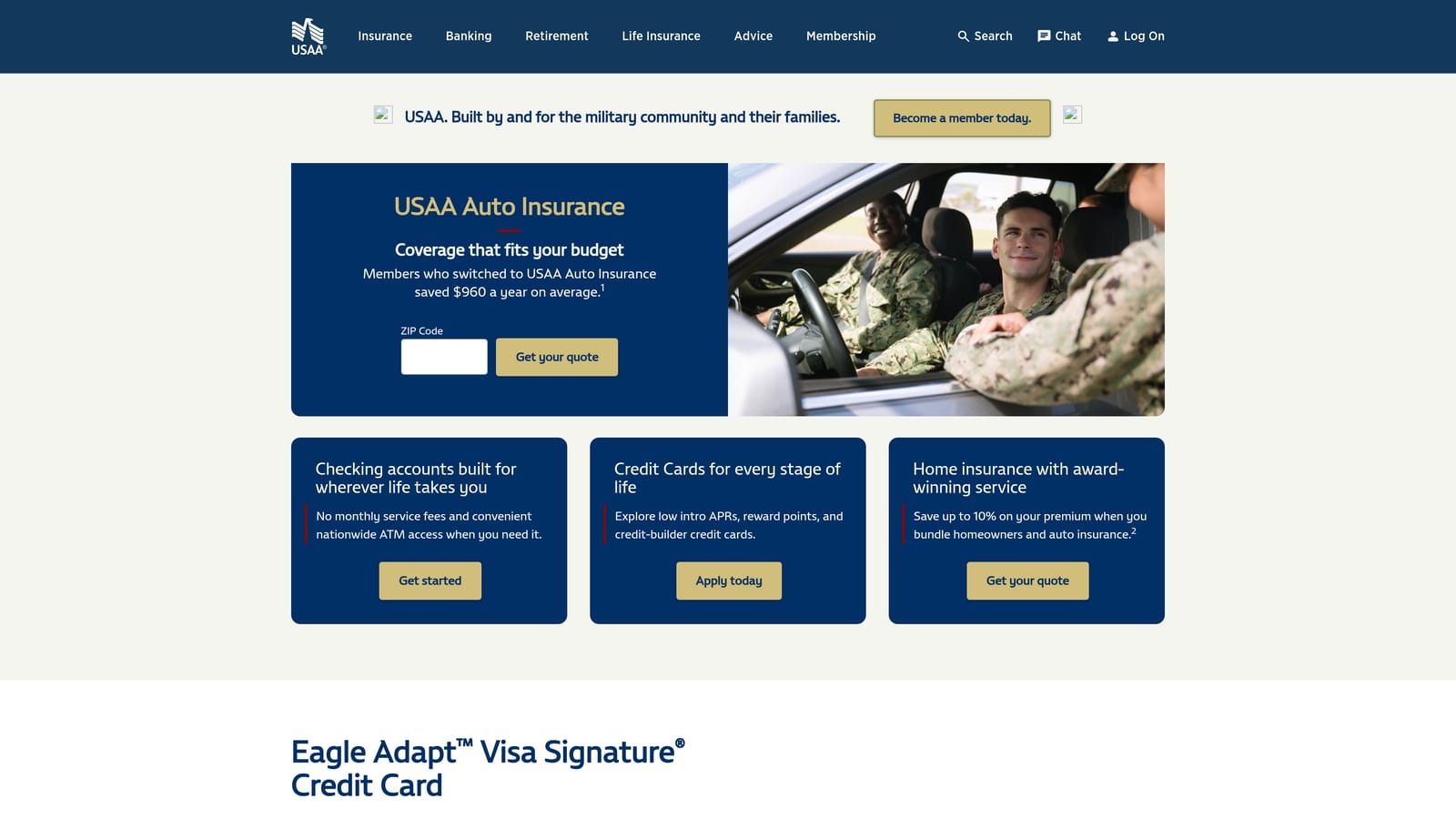
For example, a veteran who already carries a USAA auto insurance policy can add USAA Classic Checking to the same membership. Bill pay, auto-pay for the insurance premium, and account transfers all live in one dashboard.
- Confirm discharge character, honorable or general under honorable conditions, on USAA's published eligibility page before applying.
- Apply with a DD-214 and an existing USAA membership number if one exists.
- Keep insurance and checking under the same login.
The recurring mistake is veterans with other-than-honorable discharges spending time on a USAA application that will be denied, instead of going directly to PenFed, which is open to anyone. Checking eligibility first saves a wasted application.
Deposits at USAA Bank carry FDIC coverage to $250,000.
3. PenFed Credit Union
PenFed offers the widest membership eligibility in the space, since anyone, not just veterans, can join by opening a $5 savings account, and it pairs that access with competitive certificate of deposit rates for savers with a defined timeline. That combination makes it useful both as a primary account and as a rate-shopping destination for short-term cash.
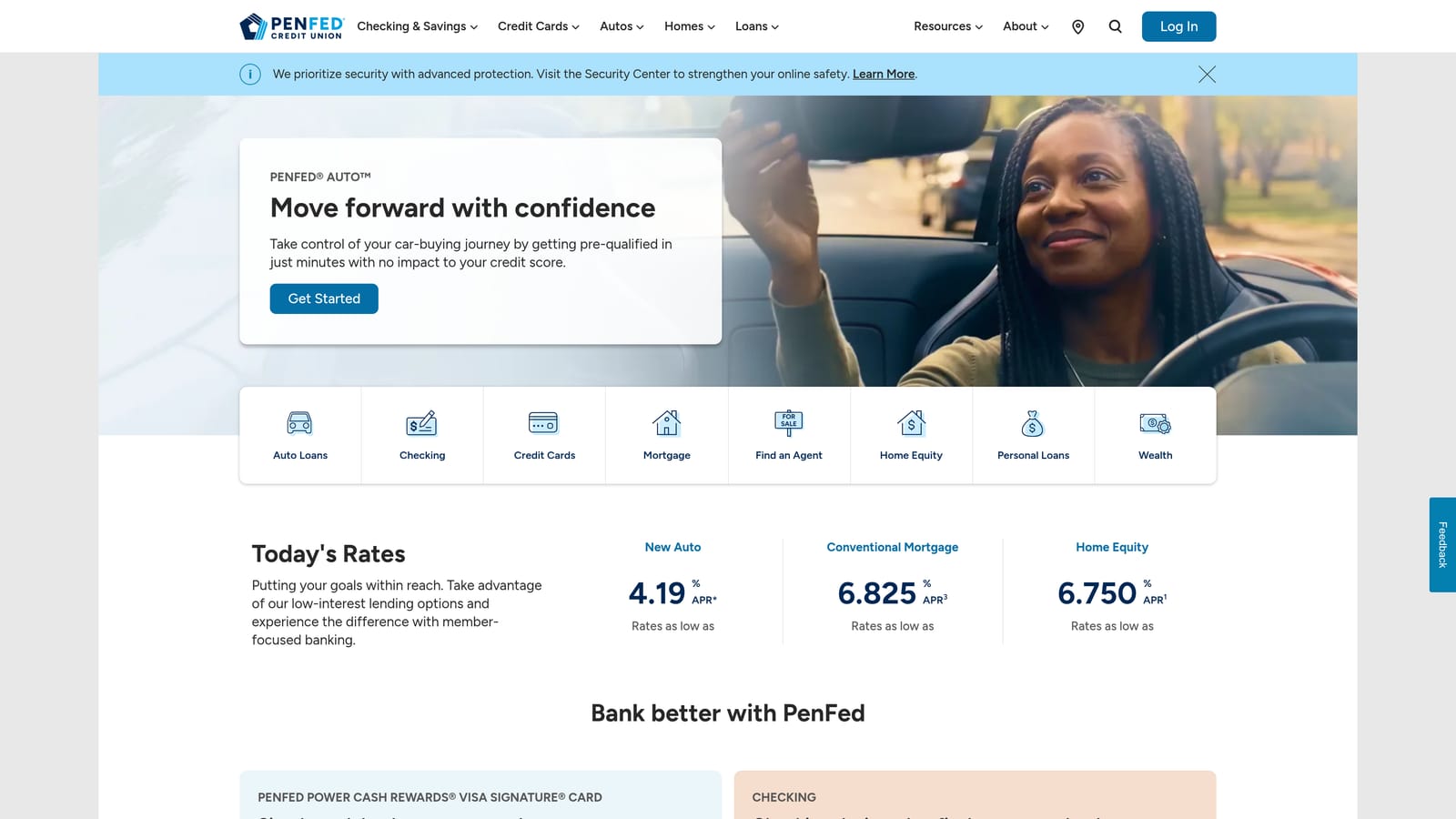
Suppose a veteran is building a six-month emergency fund. Laddering PenFed CDs across six-month, one-year and two-year terms lets that saver lock in PenFed's posted certificate rates across several maturities, while keeping a portion of the fund accessible at each maturity date. Rates on specific terms should be verified on PenFed's site before committing, since certificate pricing shifts with Federal Reserve policy moves.
- Open a $5 PenFed Regular Savings account to establish membership; this step requires no military service.
- Apply for a PenFed checking account once membership is active.
- Shop certificate terms, and ask PenFed whether any military-specific offers apply.
The mistake savers make is assuming PenFed membership itself confers military benefits, when in fact anyone can join through the $5 savings account. Any military-specific offer is separate from membership, so ask about it directly.
Compare the APY earned on PenFed CDs and savings against Navy Federal's posted rates for the same term length before committing new deposits. NCUA insurance covers PenFed balances to $250,000.
4. Axos Bank
Veterans who relocate frequently for civilian jobs or live far from a credit union branch often do better with an online-only bank than with a brick-and-mortar institution tied to a physical footprint. Axos Bank fills that gap with no monthly maintenance fee on Rewards Checking and nationwide ATM fee reimbursement instead of a proprietary network.
Consider a veteran who moves twice in three years for a civilian career. Rather than hunting for an in-network ATM in each new city, that veteran can use any machine and rely on Axos to reimburse the fee, while Rewards Checking charges no monthly maintenance fee regardless of balance.
- Apply online with a government-issued ID and Social Security number.
- Fund the account through an ACH transfer or mobile check deposit.
- Set up direct deposit, the first condition for a higher rate tier; the top rate also requires regular debit card use and a balance in Axos Invest.
The mistake to avoid is choosing Axos expecting easy in-person cash deposits. The bank does not support direct cash deposits without a third-party retail partner, which makes it a poor fit for veterans who handle a lot of physical cash.
The rate tiers change, so confirm them with Axos before opening. Axos deposits carry standard FDIC coverage to $250,000. Full terms are in the Axos Rewards Checking review.
5. Chase Military Banking
Veterans who need in-person service, whether for notarizing military records or accessing a safe deposit box, gain something online-only banks cannot offer: a nationwide branch network. Chase Military Banking pairs that footprint with fee waivers for eligible military customers.
A veteran who needs a document notarized for a VA claim or wants a safe deposit box for discharge paperwork can walk into one of Chase's thousands of branches, an option unavailable at Axos, SoFi, or most credit unions with limited physical locations.
- Ask Chase whether your service record qualifies for Chase Military Banking before opening.
- Link Chase Total Checking and Chase Savings accounts.
- Check each statement that the monthly service fee is being waived.
The common mistake is parking significant savings in Chase Savings. Its standard APY trails online banks and credit unions by a wide margin, so veterans who keep large balances there are giving up meaningful interest income for the sake of branch convenience.
Chase deposits are FDIC-insured to $250,000.
6. Bank of America
Veterans living on fixed monthly income, such as VA disability payments, face real exposure to overdraft fees if a deposit is delayed even a day or two. Bank of America's SafeBalance Banking account is structurally built to block overdrafts rather than charge a fee for them, which removes that risk entirely rather than just discounting it.
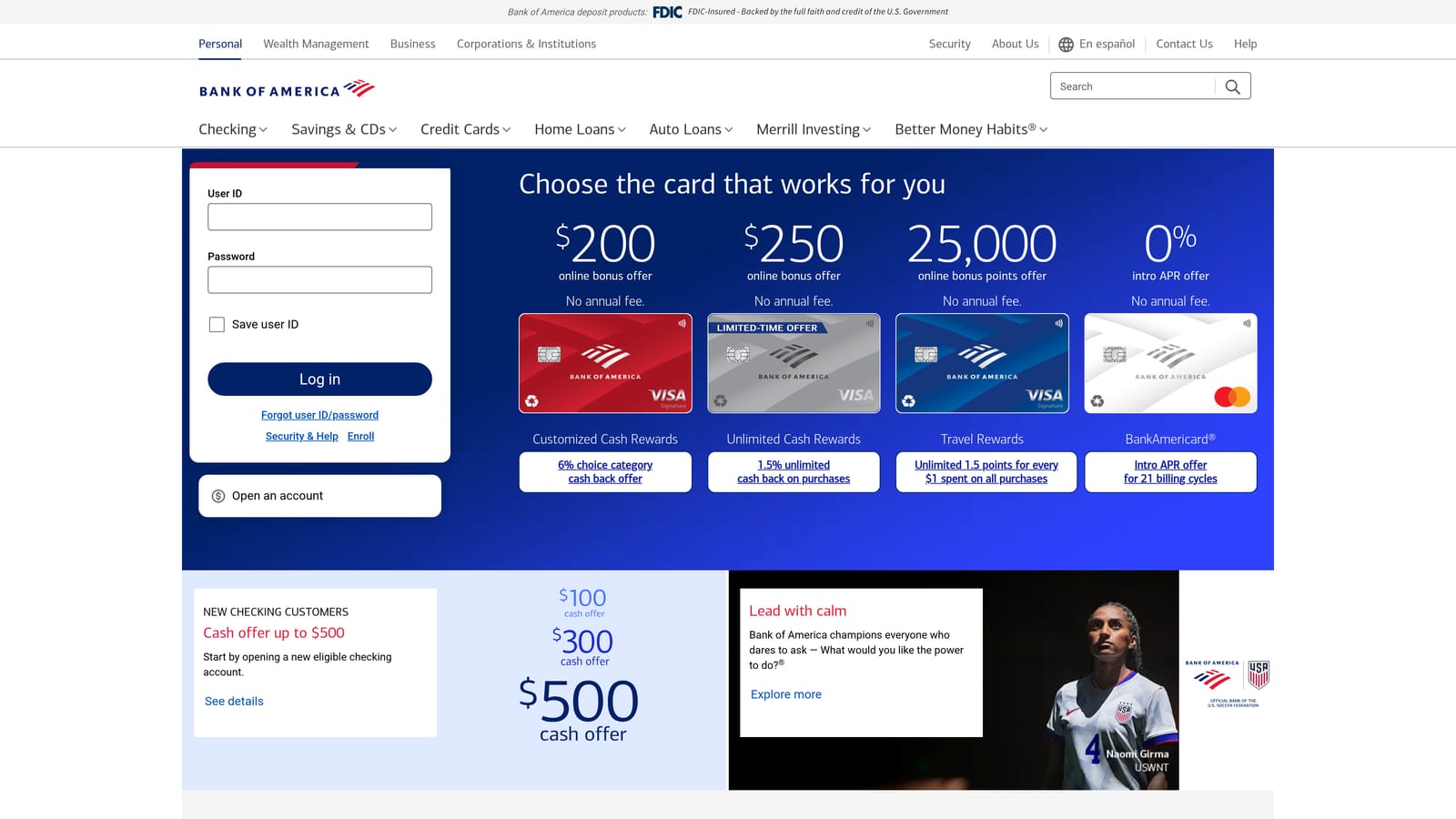
A veteran receiving a monthly VA disability payment can run all bill pay and debit transactions through SafeBalance Banking. If a payment posts a day late and a transaction would overdraw the account, the transaction is simply declined instead of triggering an overdraft charge.
- Open SafeBalance Banking online or in a branch.
- Track combined balances across Bank of America and Merrill accounts over time.
- Evaluate Preferred Rewards enrollment once those combined balances meet the program's minimum tier.
The mistake veterans make is assuming military status alone waives fees at Bank of America. It does not. SafeBalance and Preferred Rewards benefits depend on account structure and balance thresholds, not service history, unlike Chase's military-specific waiver program.
Confirm the tier thresholds with Bank of America, since they change. Bank of America deposits are FDIC-insured to $250,000.
7. SoFi
SoFi does not build products around military service the way Navy Federal or USAA do, but it competes on two things many veterans value more day to day: a high-yield savings rate and early access to direct deposits. For veterans receiving VA disability payments or a civilian paycheck, getting funds up to two days early can matter more than a niche military perk they'll never use.
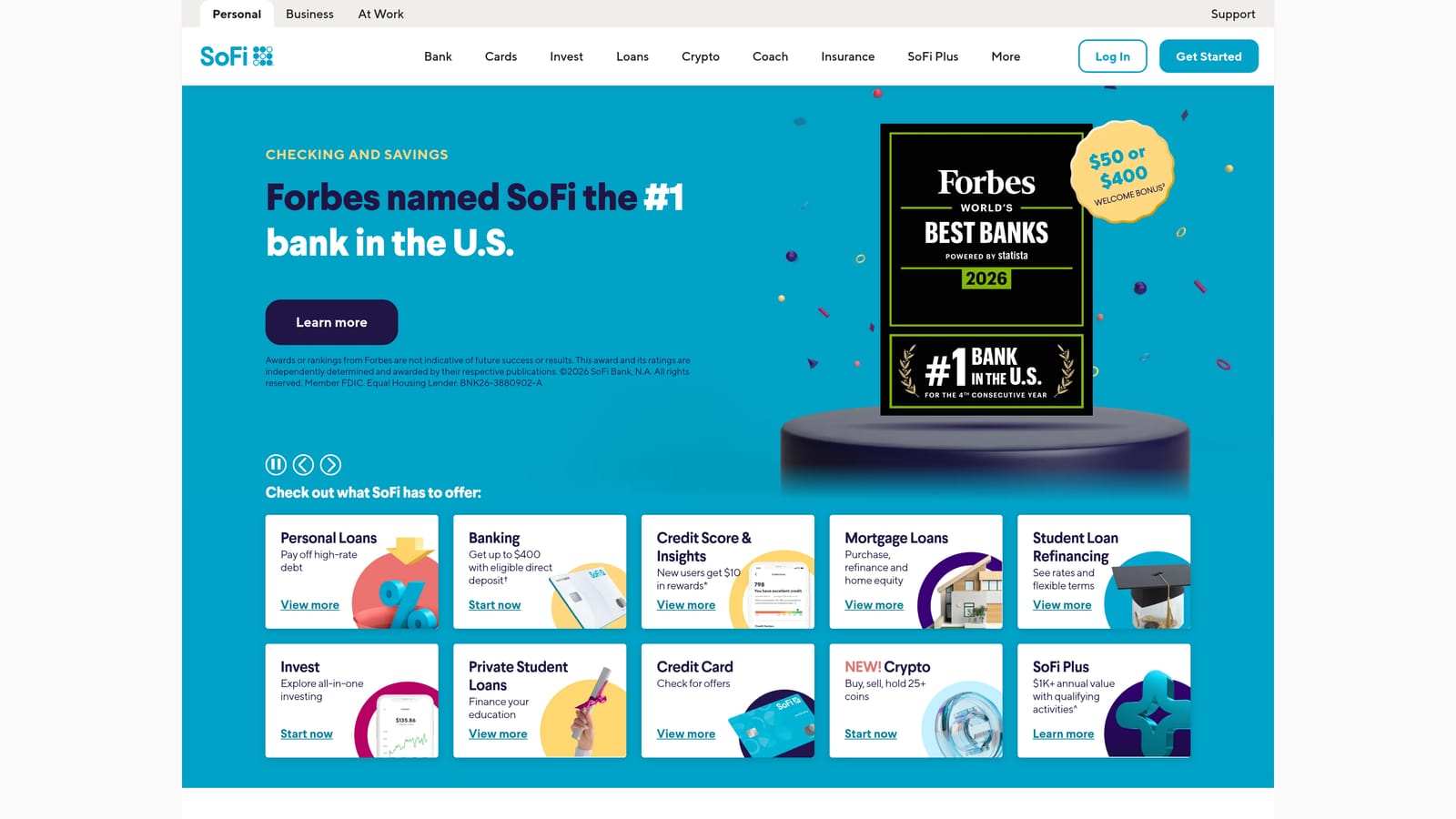
A veteran timing rent around a VA disability deposit can use SoFi's early direct deposit feature to access funds ahead of the standard payment date, smoothing out cash flow around a fixed monthly bill.
- Open SoFi Checking and Savings online.
- Set up direct deposit to qualify for the top APY tier on the savings balance.
- Use the auto-save "Vaults" feature to separate savings goals, such as an emergency fund versus a vehicle down payment.
The mistake is expecting SoFi to replicate Navy Federal's or USAA's military-focused products. It should be treated as a rate-and-convenience play, not a full military-banking substitute.
Measure the blended APY earned across the combined checking and savings balance and compare it directly against Navy Federal's and PenFed's posted rates for the same period, since SoFi's APY tiers change; confirm them before opening. SoFi Bank deposits are FDIC-insured to $250,000. Current rate tiers are in the SoFi Checking and Savings review.
Sequencing the Right Combination for Your Situation
Start with eligibility, not marketing. Veterans who qualify for Navy Federal, or who join PenFed, which is open to anyone, should start there. From there, layer in a high-yield online option like SoFi or Axos to house savings that don't need to sit inside a credit union share account.
Reserve USAA for veterans who specifically want banking and insurance bundled under one login, and reserve a national bank like Chase or Bank of America for veterans who genuinely need branch access, notarization services, or overdraft-proof checking tied to fixed monthly income. No single institution serves every need well, and the combination that works for a veteran with a VA disability check differs from one working full-time with employer direct deposit.
Before opening anything, compare current savings rates across banks and credit unions.