
7 Best Banks for Retirees and Seniors in 2026
The best banks for retirees and seniors in 2026, compared on fees, ATM rebates for travel, and how well each works alongside the IRA or brokerage.
By Michael Hewitt, Founder & Editor-in-Chief. Updated September 24, 2026.
Retirees manage money differently than someone still earning a paycheck. Fixed income from Social Security and pensions arrives on a schedule, required minimum distributions (RMDs) force periodic withdrawals from tax-deferred accounts starting at age 73 under current IRS rules, and every dollar lost to an ATM surcharge or a monthly maintenance fee cuts directly into a budget that isn't being replenished by new earnings. The right bank for this stage of life isn't necessarily the one with the flashiest annual percentage yield (APY). It's the one that minimizes fees, integrates cleanly with brokerage and IRA accounts holding RMD assets, and keeps idle cash working at a competitive rate while remaining insured by the FDIC up to $250,000 per depositor, per bank, per ownership category. The seven institutions below are compared against those priorities, not just headline rates.
1. Charles Schwab Bank Investor Checking
Schwab Bank Investor Checking reimburses ATM fees worldwide, with no limit on the number of rebates per statement cycle. That single feature makes it one of the strongest hub accounts available for retirees who travel domestically or split time abroad, since fees on ATM withdrawals abroad are refunded automatically rather than requiring a reimbursement claim.
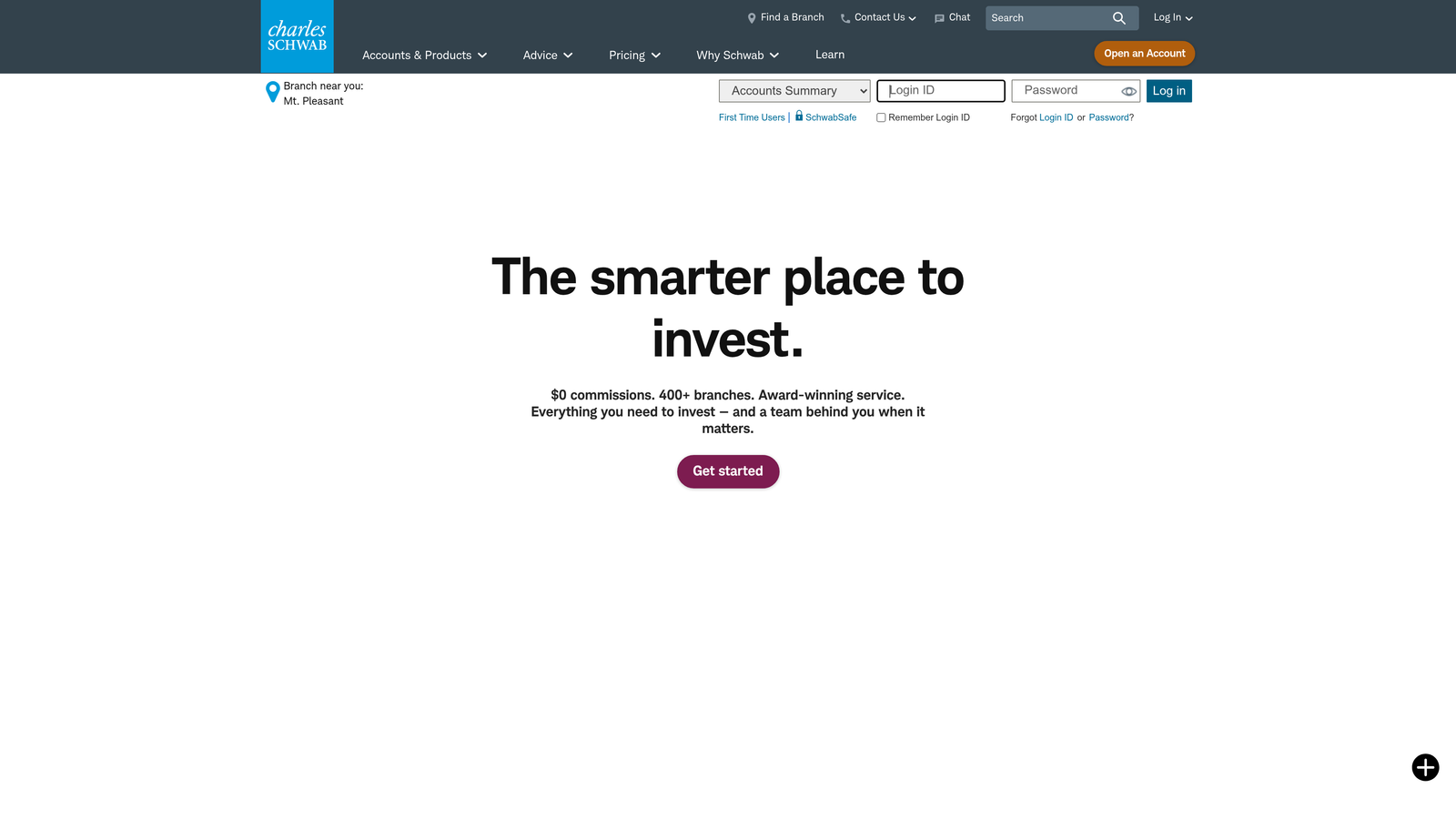
Consider a retiree who spends winters at a rental property outside the United States. Rather than carrying cash or absorbing ATM operators' fees, that retiree withdraws local currency from any ATM, and Schwab refunds the ATM fees at the end of the statement cycle. Cash not needed for spending can move to the linked Charles Schwab brokerage account rather than sitting in checking.
- Open a Schwab One brokerage account; Investor Checking is opened alongside it.
- Link Investor Checking to the brokerage account during setup.
- Set up direct deposit for Social Security or pension payments to route income directly into the account.
The most common mistake is assuming Investor Checking can be opened as a standalone product. It cannot. Move cash beyond a month or two of spending into the brokerage account or a higher-yield savings product rather than letting it sit idle.
Read our review of Bread Savings High-Yield Savings. Best for: Savings + CD ladder combos. Disclosures
2. Ally Bank Online Savings Account
Ally's Online Savings Account carries no monthly fee and no minimum balance requirement, and its variable APY is set competitively against other direct banks; confirm the current rate before opening, since online savings rates move with Federal Reserve policy. The account's standout feature for retirees is Buckets, which lets savers mentally and functionally segment one account balance into multiple goals without opening separate accounts.
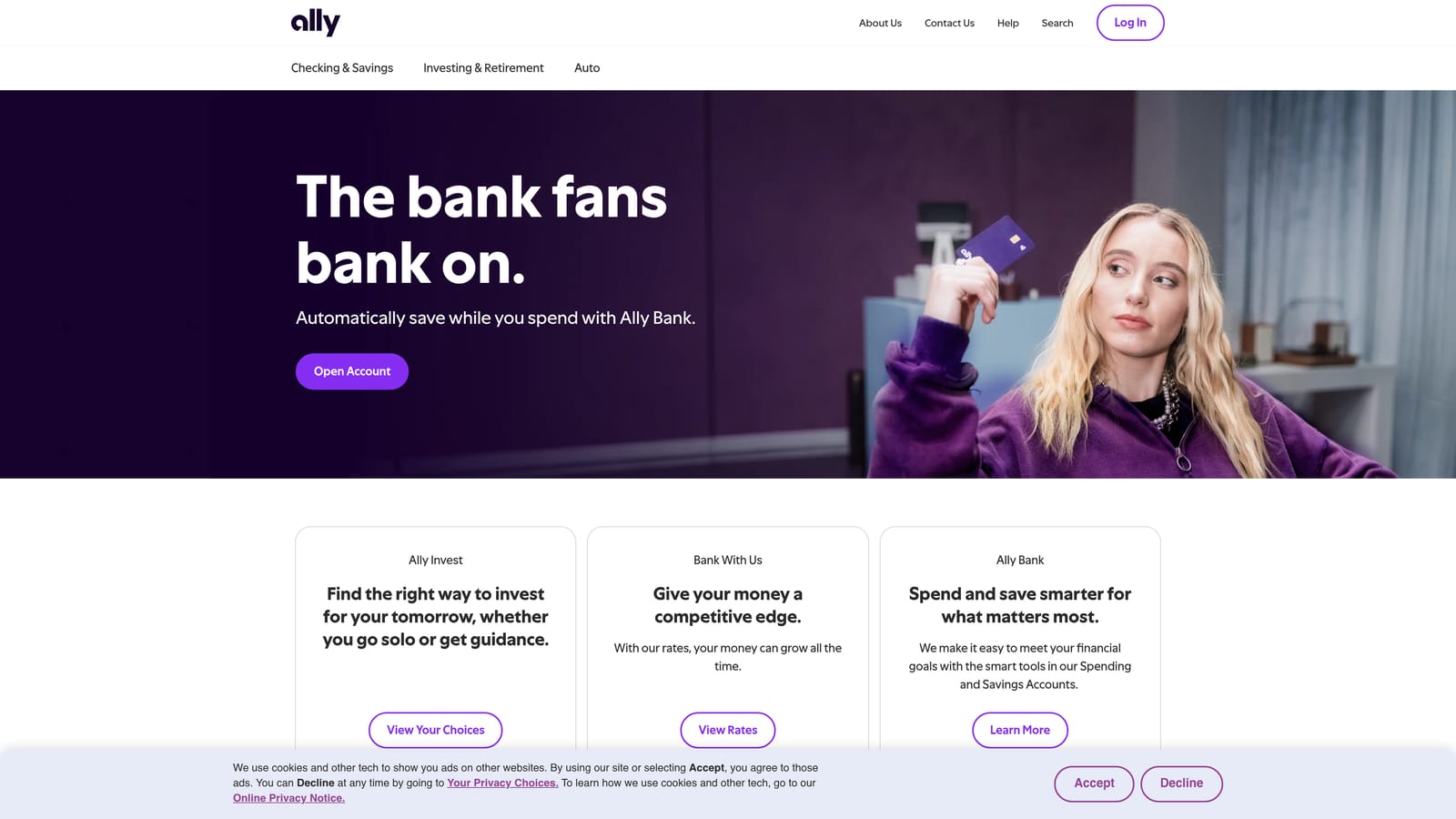
For example, a retiree might create three Buckets inside one Ally Bank savings account: one for the annual property tax bill, one for a travel fund, and one as a healthcare reserve. Each Bucket tracks its own balance and progress toward a savings goal, while the full balance still earns the same APY.
- Open the account online, which typically takes under 15 minutes with a Social Security number and linked bank information.
- Link an external checking account, such as Schwab or Capital One, for transfers in and out.
- Create Buckets for specific goals and label them clearly.
- Set up recurring transfers timed to Social Security or pension deposit dates so savings happen automatically.
The common mistake is treating the advertised APY as permanent. Online savings rates are variable by design and move with Federal Reserve rate decisions, so a rate that looks attractive at account opening can decline within months. Retirees should recheck the rate at least quarterly and compare it against competitors.
3. Capital One 360 Checking and Performance Savings
Capital One pairs fee-free 360 Checking with Performance Savings, giving retirees a hybrid option that combines digital convenience with physical branch and Café access in select markets. This matters for retirees who want to handle routine transactions on a phone but occasionally need face-to-face help with something like a beneficiary designation or a large check deposit.
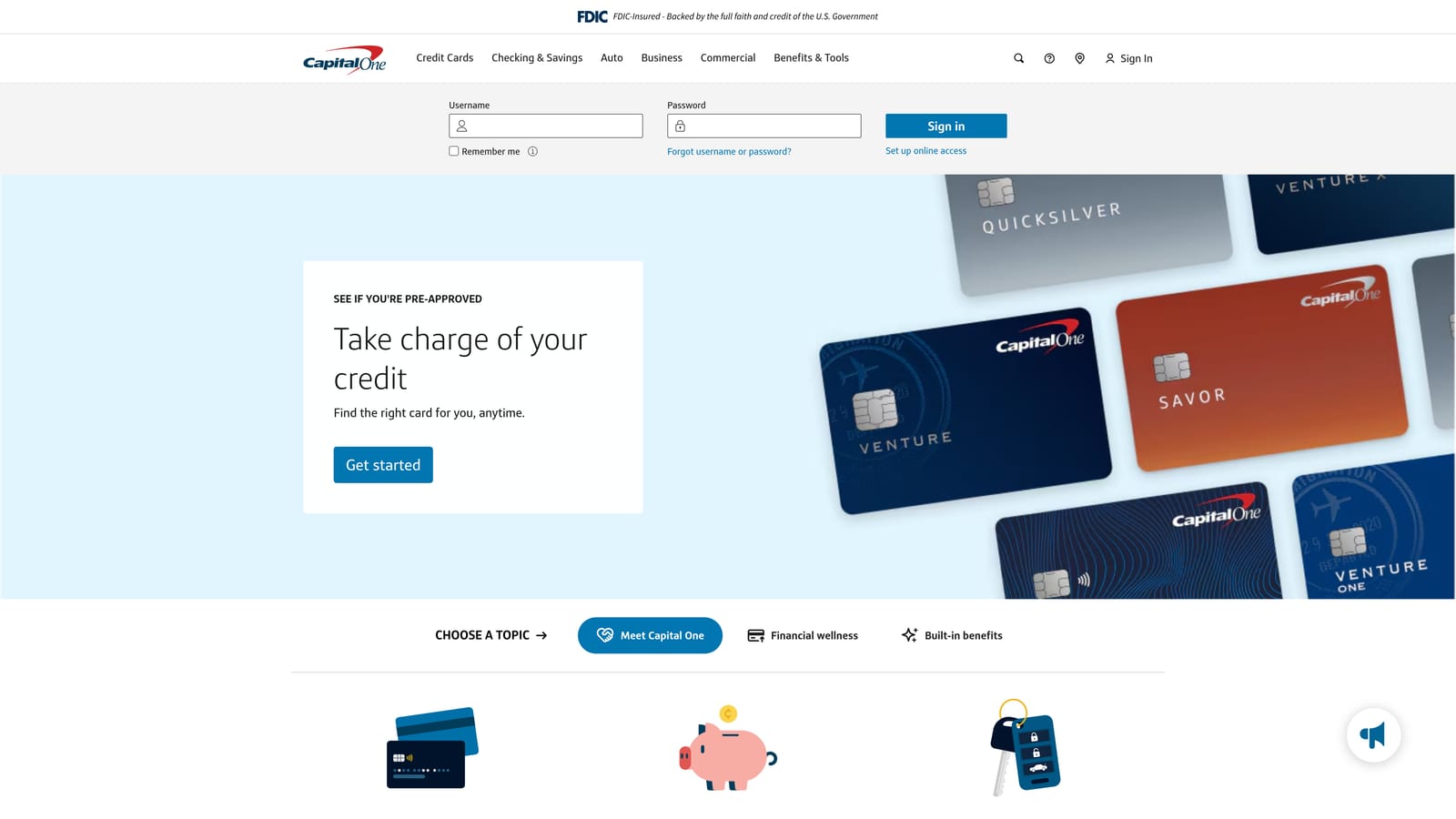
Imagine a retiree living in a metro area with a Capital One Café. That retiree visits in person once to set a beneficiary on a savings account, then manages day-to-day spending and transfers entirely through the mobile app for the rest of the year, using Capital One's Zelle integration to send money to adult children or grandchildren.
- Open 360 Checking online or in a branch.
- Link Performance Savings to hold idle cash at a higher yield than checking.
- Enable Zelle for fee-free transfers to family members.
- Set up mobile check deposit to handle pension or distribution checks without a branch visit.
The common mistake is assuming branch access will remain convenient after a move. Capital One's physical footprint, including its Café locations, is concentrated in select metro markets. A retiree relocating to a rural area or a smaller town may find no nearby branch at all, despite having relied on in-person service previously. Confirm branch proximity to any planned retirement address before treating this as a long-term banking home.
4. Marcus by Goldman Sachs Online Savings Account
Marcus offers a no-fee, no-minimum-balance online savings account built purely for holding cash, with no checking, debit card, or bill-pay features attached. That narrow focus is an advantage for retirees who want a clean separation between spending accounts and savings, particularly when parking a lump sum temporarily.
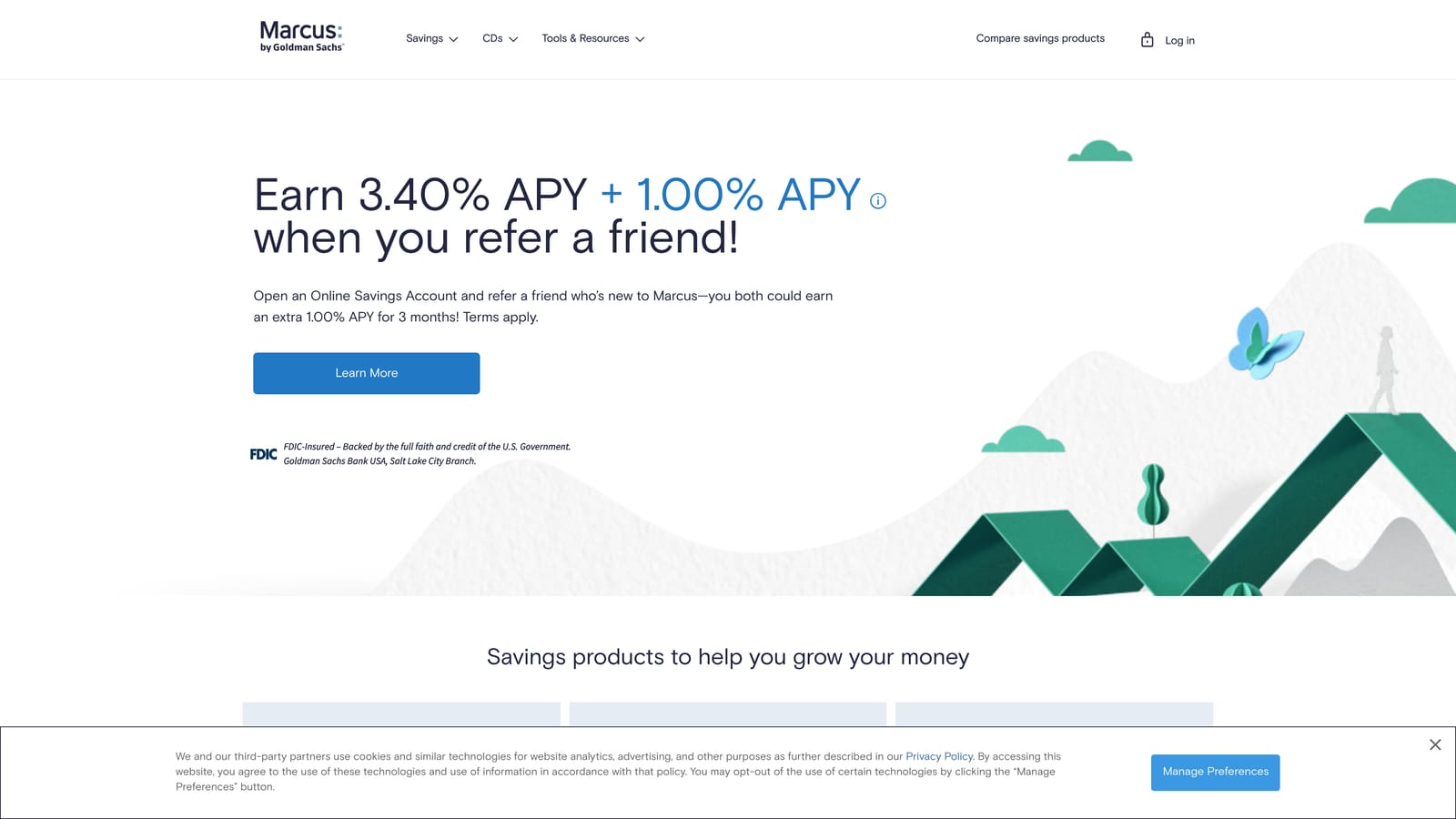
Consider a retiree who just took an RMD from a traditional IRA and hasn't yet decided how to reallocate it into a taxable brokerage account. Parking the distribution in a Marcus by Goldman Sachs savings account for a few months earns interest on the balance while the retiree evaluates reinvestment options, rather than letting the cash sit uninvested in a low-yield checking account.
- Open the account online with basic identifying information.
- Link an external checking account, such as one from Schwab or Capital One, for transfers.
- Use the account strictly as a savings or short-term holding vehicle rather than for daily spending.
The common mistake is expecting bill-pay or debit card functionality that Marcus does not offer. Savings and CDs are the only products available, so retirees need a separate checking account for everyday transactions. Marcus's rate is not always the market leader and can lag competitors after a rate change, so compare it once a quarter.
5. Fidelity Cash Management Account
Fidelity's Cash Management Account lets the holder choose where uninvested cash sits: a government money market fund, which is not FDIC-insured, or Fidelity's FDIC-Insured Deposit Sweep Program, which places it with program banks and, according to Fidelity, can extend FDIC coverage up to $4 million. It pairs that with a debit card, check-writing capability, and ATM fee reimbursement. For retirees who already hold an IRA or brokerage account at Fidelity, this creates a single platform for both investments and daily spending.

A retiree with an existing IRA at Fidelity can direct RMD distributions straight into the linked Cash Management Account and spend from that balance without ever transferring funds to an outside bank, simplifying recordkeeping around annual distributions.
- Open a Fidelity brokerage account if not already a customer.
- Add the Cash Management Account as a linked product.
- Set the RMD or Social Security deposit destination to route directly into the account.
- Order the debit card and checks for day-to-day spending.
The most important mistake to avoid is not checking which of the two options holds the cash. Money in the money market fund is protected under SIPC rules for brokerage assets, not by FDIC deposit insurance; only the deposit sweep carries FDIC coverage. Choose the sweep if FDIC protection matters for this money, and confirm current coverage terms with Fidelity before treating it as a sole cash reserve.
6. Synchrony Bank CDs and No-Penalty CD
Synchrony offers standard certificates of deposit alongside a no-penalty CD option, which allows early withdrawal of the full balance and accrued interest without the penalty typically charged on early CD withdrawals. That structure suits retirees who want a CD's fixed rate but need flexibility in case an expense arrives sooner than planned.
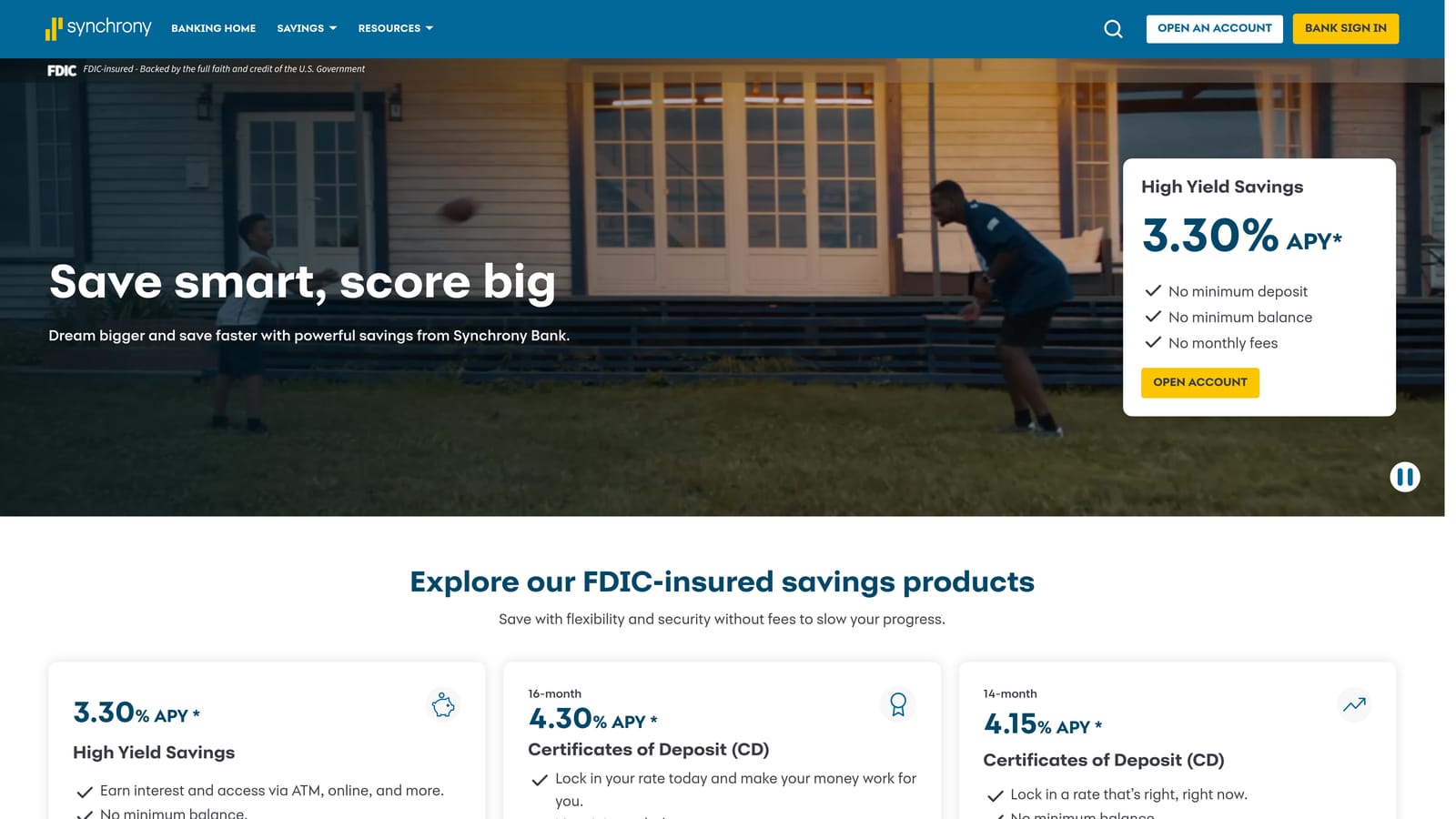
A retiree might build a ladder across 3-month, 6-month, and 12-month Synchrony Bank CDs timed to expected medical bills or a property tax due date, while keeping a portion in a no-penalty CD as a buffer for funds that might be needed unexpectedly.
- Open a Synchrony savings account or CD directly online.
- Choose CD terms that align with known upcoming expenses, such as tax deadlines or planned large purchases.
- Allocate a portion of savings specifically to the no-penalty CD tier for funds that might be needed within the term.
The common mistake is locking the majority of retirement cash into standard CDs without a no-penalty rung or a short-term ladder step. Doing so can force an early-withdrawal penalty if an unexpected expense, such as a home repair or medical bill, arises before maturity. Track the blended APY across the full CD ladder against a standalone high-yield savings account, and reassess at each CD's maturity date to decide whether to renew, extend the ladder, or move funds elsewhere.
7. Axos Bank Rewards Checking
Axos Rewards Checking uses a tiered APY structure that increases with qualifying direct deposits and account activity, paired with unlimited domestic ATM fee reimbursement. This design rewards retirees who consolidate multiple income streams, such as Social Security plus a pension, into a single account.
A retiree who routes both deposits into Axos can climb into a higher APY tier than a standard checking account would ever offer, all while retaining fee-free access to any ATM nationwide since charges are reimbursed rather than avoided through a limited partner network.
Getting the most from the account requires deliberate setup:
- Apply online directly through Axos.
- Set up recurring direct deposits large enough to meet the direct-deposit condition; the top rate also requires regular debit card use and a balance in Axos Invest.
- Use any ATM without worrying about network restrictions, since fees are reimbursed after the fact.
The common mistake is missing the direct-deposit or minimum-activity requirement needed to unlock the highest advertised APY tier, which leaves the account holder earning a much lower blended rate than expected. Verify which tier applies each statement cycle based on deposit activity and balance. Full details are in the Axos Rewards Checking review.
Read our review of NBKC Everything Account. Best for: Simplicity seekers who want real APY. Disclosures
Building a Retirement Banking Stack That Fits Your Spending Pattern
No single account covers every need a retiree has. A practical sequence starts with Schwab Bank Investor Checking as the primary spending and travel hub, given its unlimited worldwide ATM fee rebates and direct brokerage integration for managing RMD proceeds. From there, layering in Ally or Marcus for high-yield savings separates spending cash from reserve cash, and a Synchrony CD ladder converts a portion of that reserve into fixed-rate deposits that mature when known expenses fall due.
Retirees who already bank with a large brokerage, such as Fidelity, may find it simpler to consolidate around that platform's Cash Management Account rather than adding a fourth or fifth institution to track. Compare high-yield savings rates before deciding where to move retirement cash.