
Best Online Banks 2026: 6 Top-Rated Picks
The best online banks for 2026, compared on how each account's rate works, its fees, access to cash and transfer speed.
By Michael Hewitt, Founder & Editor-in-Chief. Updated September 24, 2026.
Online savings accounts at digital banks pay several times the national average savings rate the FDIC publishes each month. But the gap between the best and worst online offers has widened past a full percentage point, and several top APYs only apply once a saver meets a direct deposit or balance condition. Each account below is compared on the terms its bank publishes: how the rate is structured, what it costs to hold, how the money can be reached, and how fast it moves.
1. Ally Bank
Ally's Online Savings Account has held its position as a benchmark no-fee, no-minimum account for over a decade, and its Buckets feature is what sets it apart. Buckets let a saver mentally and visually segment a single savings account into sub-goals, such as "Rent Buffer" and "Medical," without opening separate accounts or diluting the APY across multiple products.
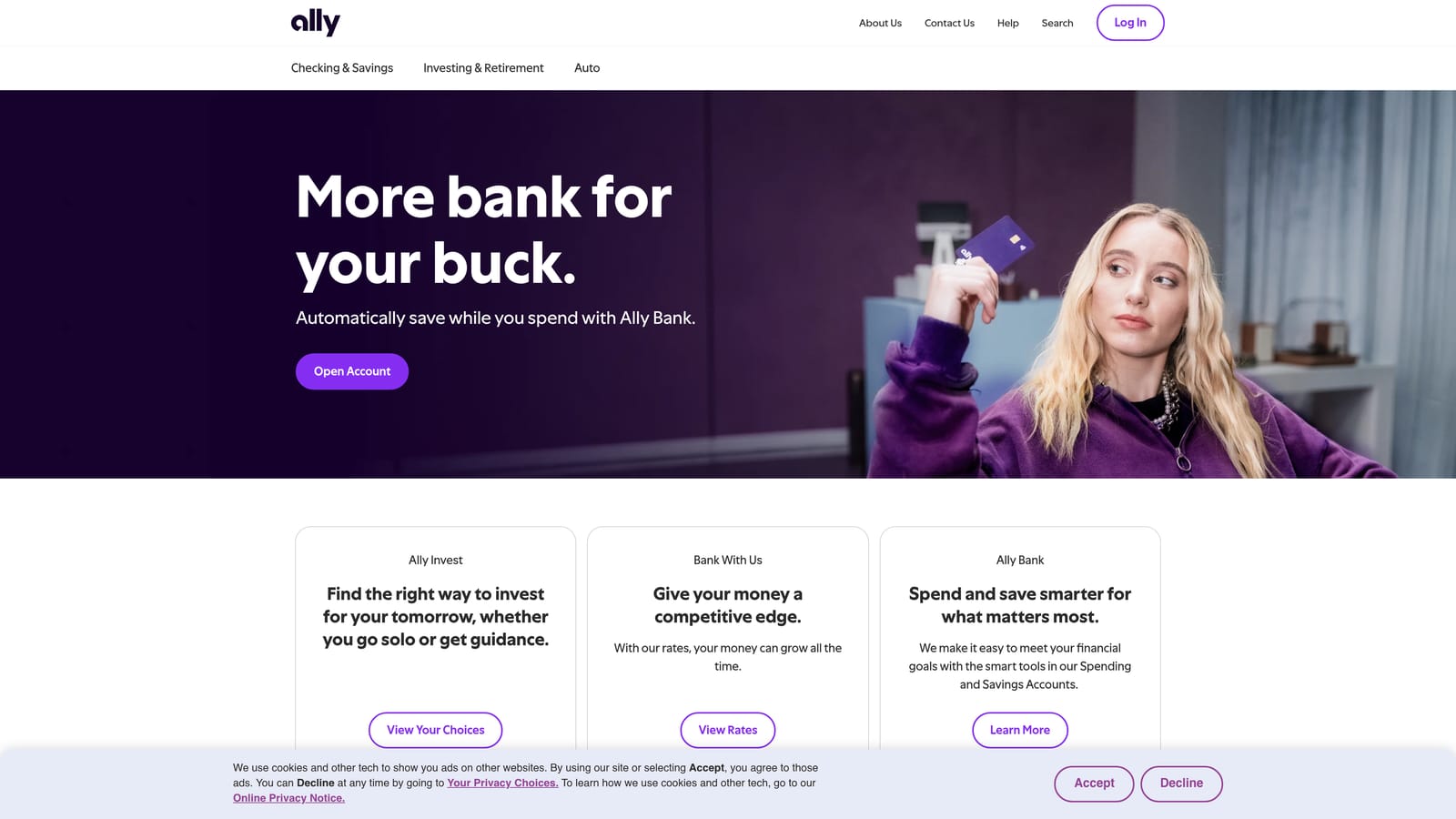
Consider a saver with a $15,000 emergency fund who splits it into a $10,000 rent buffer and a $5,000 medical reserve inside one Ally account. Both buckets earn the same posted APY, but the saver can track progress toward each goal independently in the app, which can make it easier to leave each fund for the purpose it was set aside for.
- Open the account online, a process that takes about 10 minutes and requires only a Social Security number and government ID.
- Link an external checking account using its routing and account number to enable ACH transfers.
- Create Buckets for specific goals and optionally enable round-up savings from a linked debit card.
The most common mistake is assuming the advertised APY is locked in. Ally's rate floats with Federal Reserve policy, and the bank has adjusted it multiple times over the past two years as the Fed shifted its target rate. Savers should check the rate disclosure monthly rather than assuming the number they saw at signup still applies. Track the effective APY earned over a rolling 12-month period against the FDIC's published national average savings rate to confirm the account is still outperforming by a meaningful margin. Read the full Ally Bank review for current rate details.
Read our review of Bread Savings High-Yield Savings. Best for: Savings + CD ladder combos. Disclosures
2. Marcus by Goldman Sachs
Marcus by Goldman Sachs built its reputation on simplicity: a single high-yield savings account with no checking cross-sell, no debit card, and no attempt to bundle in credit cards or investing products. That narrow focus means Goldman Sachs prices the account competitively and adjusts it in step with Fed policy changes, since the account has no other features to differentiate it in the market.
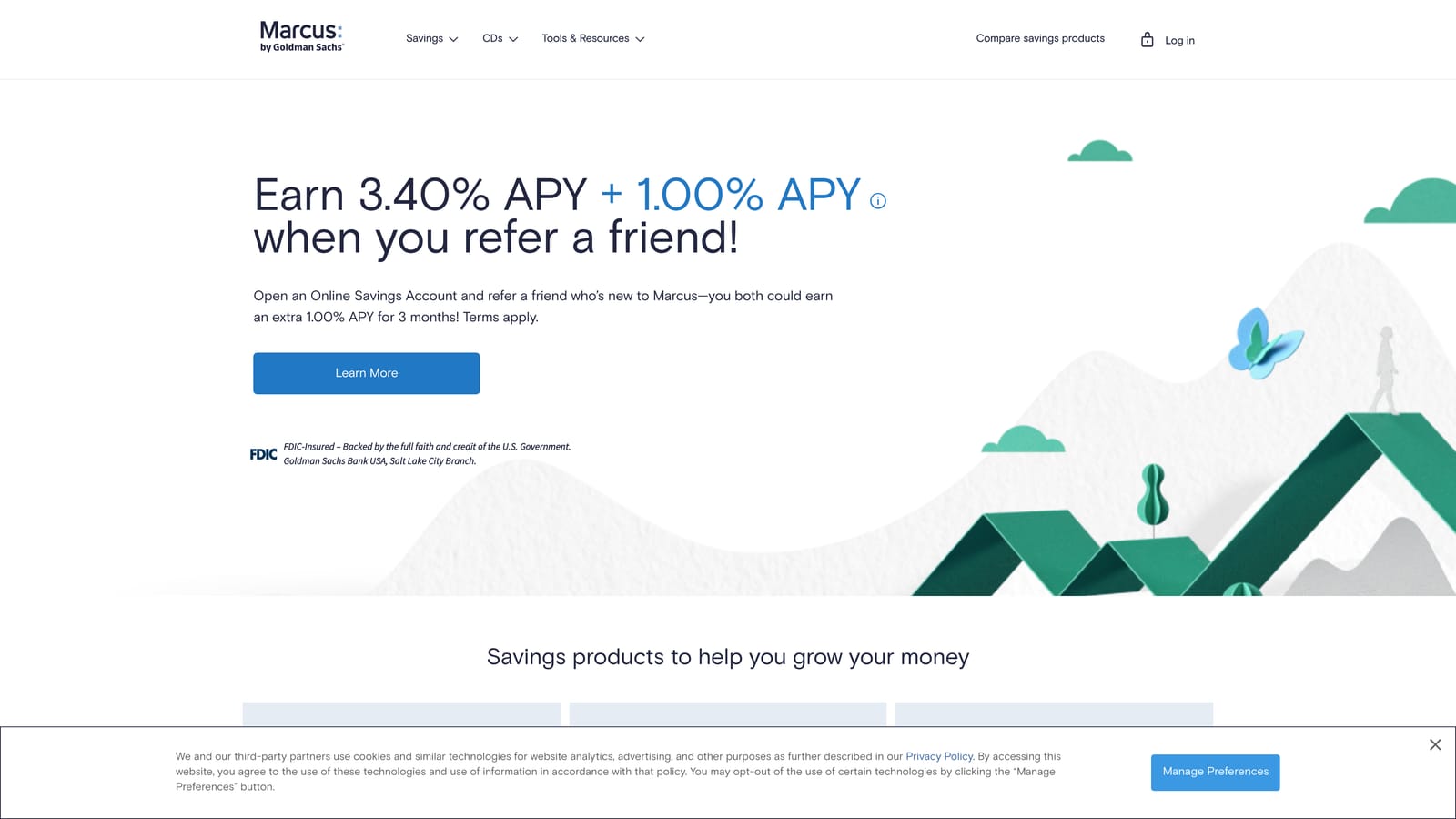
For example, a saver setting aside a $40,000 house down payment for 12 to 18 months might choose Marcus over a CD to avoid early-withdrawal penalties while still capturing a yield well above a traditional bank's savings rate. The trade-off is liquidity without lock-up, not the highest possible fixed return.
Applying takes a Social Security number and linked bank details, and initial ACH funding typically settles within two to three business days. Don't expect checking-account features: there is no debit card and no check-writing, so Marcus works best paired with a separate checking account for day-to-day spending. Because Marcus has no branch network or app ecosystem to fall back on, savers should compare its posted APY against at least two competitors each quarter to confirm it remains rate-competitive rather than assuming brand reputation alone justifies staying put. Details are in the Marcus by Goldman Sachs review.
3. SoFi Bank
SoFi's checking-and-savings hybrid uses a tiered rate structure: customers who set up qualifying direct deposit unlock a materially higher APY on savings balances than those who do not. It is the main reason SoFi's advertised headline rate misleads shoppers who compare it at face value against flat-rate competitors.
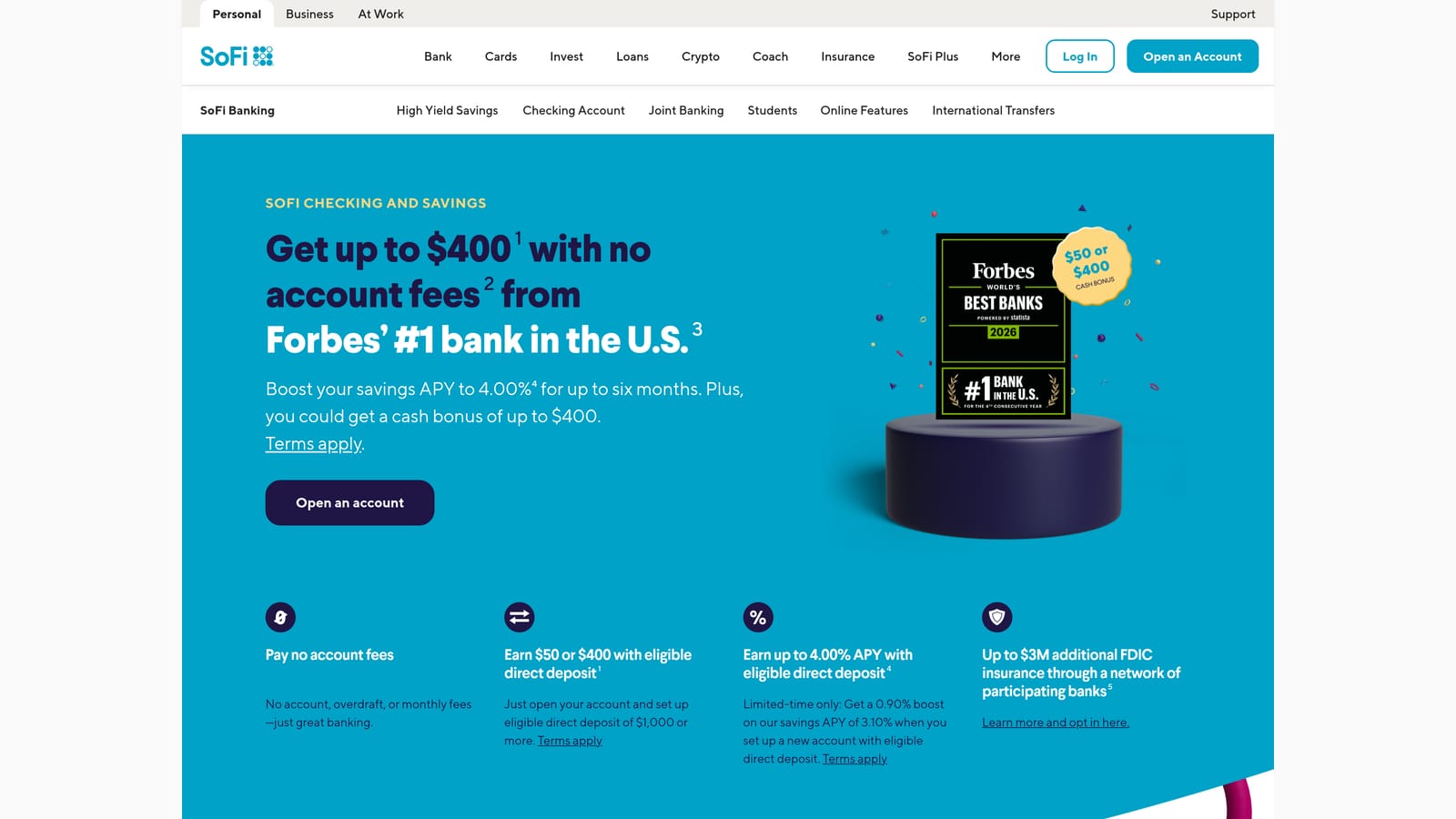
For instance, a salaried employee earning $65,000 a year who redirects payroll deposits to SoFi qualifies for the elevated APY tier, plus early access to paycheck funds, sometimes up to two days ahead of the scheduled pay date. Without direct deposit, that same saver earns SoFi's lower base rate, which can trail Ally or Marcus.
- Open the combined checking and savings account online.
- Submit direct deposit paperwork to payroll, specifying SoFi's routing and account number.
- Confirm the qualifying deposit posts and monitor the account for the rate-tier upgrade, which typically applies the following statement cycle.
The top advertised APY does not apply on day one: the higher rate is conditional and takes effect only after a qualifying direct deposit is received. Savers should confirm which APY tier applied each statement cycle and compare the timing of early paycheck access against their actual payroll deposit dates to verify the benefit is real and not just a marketing claim. Details are in the SoFi Bank review.
4. Capital One 360
Capital One 360 differentiates itself with Capital One Café locations in select cities, giving savers who want occasional in-person help a rare hybrid between an online bank and a branch network. The 360 Performance Savings account pairs this with a rate that has stayed competitive with pure online-only banks, and the app puts savings, checking and Capital One credit cards under one login.
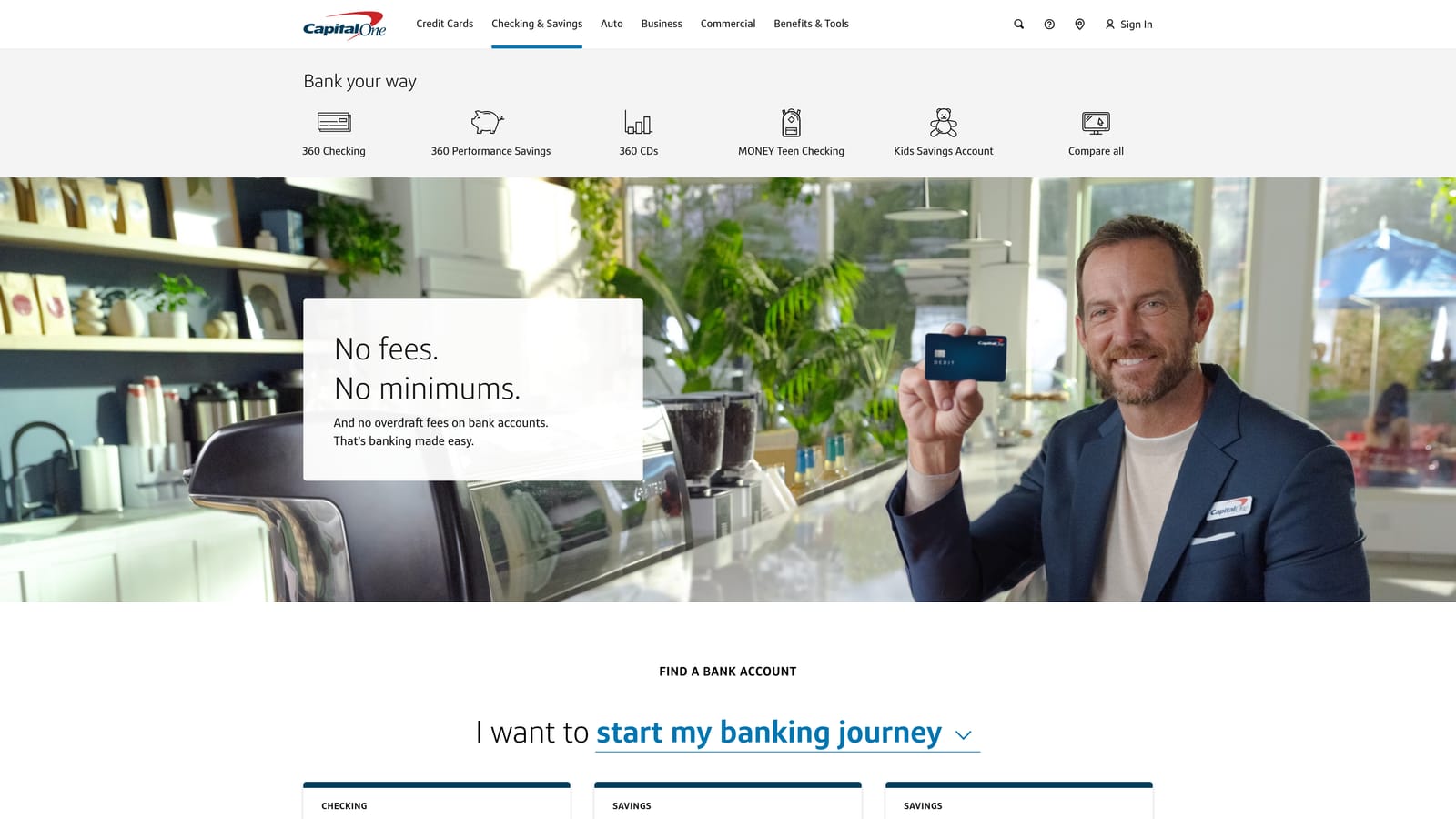
Consider a saver in a city with a Café location who uses in-person guidance to build a CD ladder ahead of an anticipated Federal Reserve rate cut, staggering maturities so a portion of the funds is always rolling over and available to reinvest at the prevailing rate.
- Open 360 Performance Savings online, which requires no minimum deposit.
- Open CDs at staggered terms, such as 6, 12, and 18 months.
- Set calendar reminders for each maturity date to decide whether to reinvest or withdraw.
Café access is not nationwide. Cafés operate only in select cities, so savers should verify a nearby location before counting it as a real benefit rather than a marketing footnote. Track the blended yield across the full CD ladder against a single lump-sum CD of the longest term to see whether laddering actually improved liquidity without meaningfully sacrificing yield. See the Capital One 360 review for current CD and savings rates.
5. American Express High Yield Savings
American Express High Yield Savings works as a no-fee, no-minimum account best positioned as a secondary holding account rather than a primary bank relationship. The mechanism here is consolidation: existing Amex cardholders can manage rewards, credit, and high-yield savings under a single login without adding a new checking relationship elsewhere.
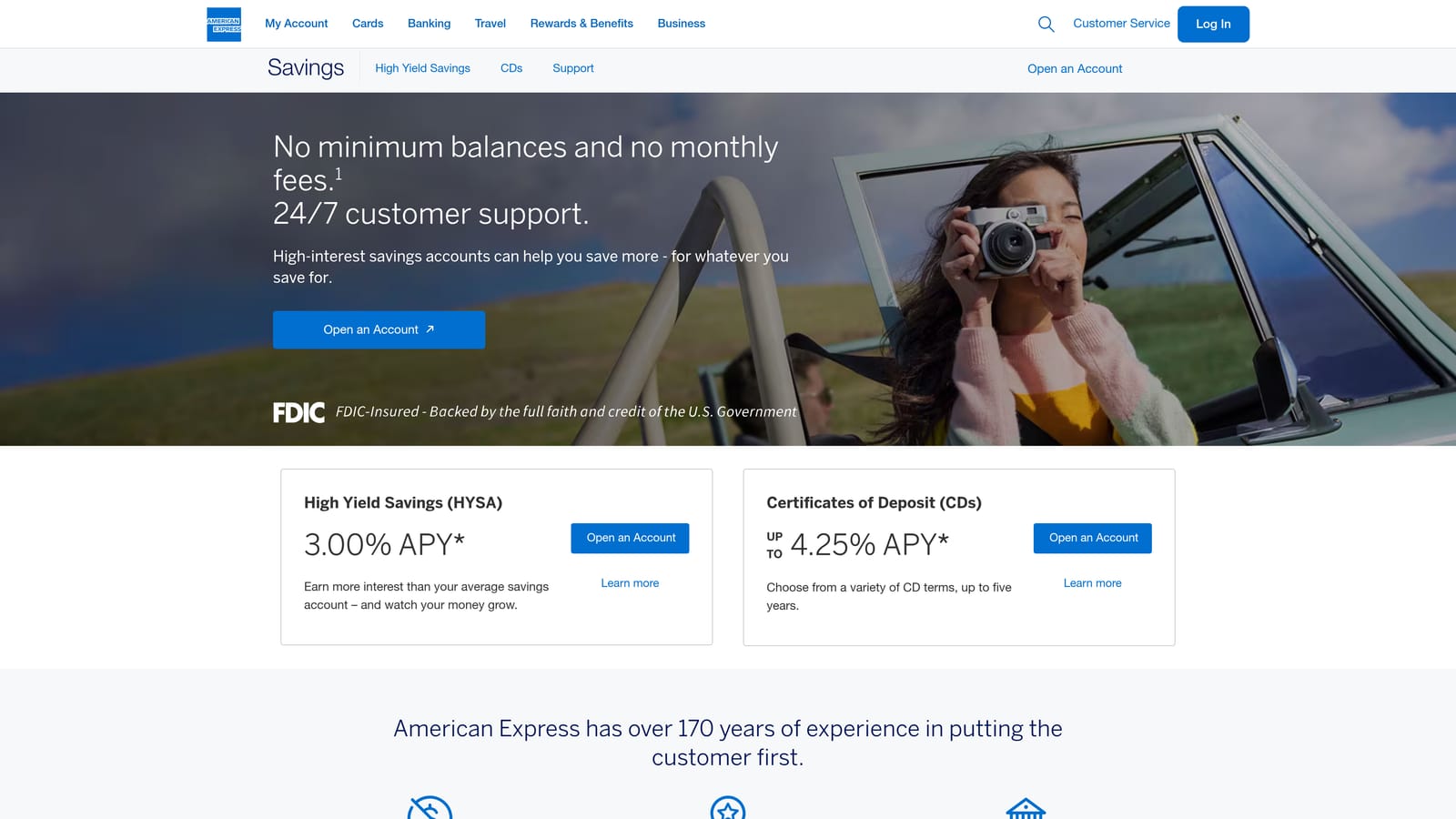
For example, an Amex cardholder who already tracks Membership Rewards points might open the savings account specifically to keep an emergency fund visible alongside credit card activity, rather than juggling a separate bank's app.
- Apply online using an existing Amex account or as a new customer.
- Link an external checking account for ACH transfers in and out.
- Set up automatic recurring transfers if using the account for a specific savings goal.
It cannot be your only bank: there is no debit card and no check-writing capability, so bill pay and everyday spending require a separate checking account. ACH transfers in and out generally settle within one to three business days, and the receiving bank's cutoff time decides which day the money lands. Details are in the American Express High Yield Savings review.
6. Axos Bank
Axos Rewards Checking uses a stackable rate-boost structure: a saver's blended APY rises based on how many qualifying conditions they meet each month, including direct deposit, a minimum number of debit card transactions, and a balance held in Axos Invest. Layered on top is unlimited domestic ATM fee reimbursement, which makes Axos function as a full checking replacement rather than a secondary savings sweep account.
A frequent traveler who uses out-of-network ATMs regularly can avoid fees nationwide while simultaneously stacking direct deposit and debit spending boosts to push the account's blended rate meaningfully above the base tier, a combination that is difficult to replicate at traditional banks offering ATM reimbursement without the rate incentive.
- Open Axos Rewards Checking online.
- Set up direct deposit through an employer or benefits provider.
- Meet the monthly minimum debit card transaction count required for the top rate.
The catch is the boost conditions: miss one in a given month, whether that's a missed direct deposit cycle, a debit transaction count that falls one short, or an Axos Invest balance that dips below the threshold. Any single miss drops the account to its base low rate for that statement cycle. Track which conditions were satisfied each month and the resulting blended APY against a flat-rate competitor like Ally or Marcus to see whether the added complexity is worth the marginal rate lift. See the Axos Bank review for current boost requirements.
Read our review of NBKC Everything Account. Best for: Simplicity seekers who want real APY. Disclosures
Matching the Account to How You Actually Bank
Savers who want a competitive yield with the least complexity should open Marcus or Ally first. Neither requires direct deposit, balance tiers, or debit spending minimums to earn its posted rate, which makes the comparison against the FDIC's national average straightforward and the money fully liquid.
Savers who want a single account to replace a traditional checking relationship, complete with ATM access and bill pay, should start with Axos or Capital One 360 and layer in a separate high-yield savings account only after confirming current APYs and FDIC coverage limits, which insure deposits up to $250,000 per depositor, per bank, per ownership category. Before moving money to any of these six institutions, verify the current APY, fee schedule, and any direct deposit requirements directly on the bank's site, since rates change with Federal Reserve policy and can shift within a single quarter. Compare current savings rates across banks before you move anything.